
Alan Kohler: Australia’s solar tsunami to trigger coal collapse | The New Daily
With marginal generation costs of zero for solar and near zero for wind, coal generators will soon start losing money overall, as daytime prices in particular collapse. In fact, the wholesale price is sometimes negative during the day.

Australia Takes Massive Financial Hit From Climate Change | Climate Council

Newsletter February 2021
Use your 2020 experience to re-asses the resilience of your organisation. The WEF Global Risks Report 2021 has identified the top three risks to focus on: supply chain, cyber and climate change.
Re-assess your risks in 2021
The Trump presidency and more recently the COVID-19 pandemic has intensified competition between the US and China. It is likely that both countries will seek superiority in the digital realm and restructure their supply chains.
According to the Global Risks Report 2021, Middle powers like Australia are likely to be squeezed. We are already suffering from China’s decisions to limit imports of a number of important commodities. Hopefully, we will not be put in a position where we have to pick a side.
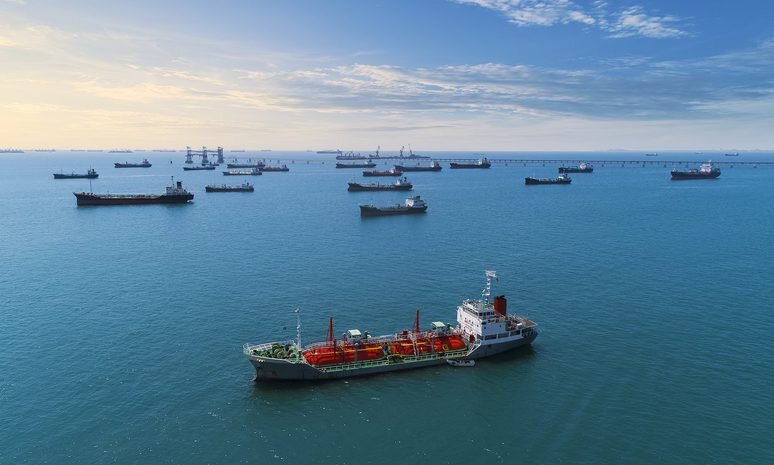
We all hope that the Biden presidency can quickly repair the damage caused by the impact of the pandemic on the US. One of the salient lessons from the pandemic is the fragility of our supply chains and the prevalence of critical products being supplied from countries far from Australia – often a single source.
Use your 2020 experience to re-asses the resilience of your supply chains. If you have staff monitoring your modern slavery obligations, they may be able to assist.
The WEF Global Risks Report 2021 also identifies the ever increasing threat posed by hackers. The sophistication, number and funding of hackers (both criminals and nation states) continues unabated.
It is difficult for organisations to decide the extent of resources they should devote to this risk. The good news is that (like washing hands and wearing a mask) basic hygiene greatly reduces the risk from being the victim of a successful attack. The Australian Cyber Security Centre has an excellent guide to assist you implement these basic hygiene actions.
Is it time to review your cyber security approach in light of the ACSC guide?
The third and most prevalent risk identified was climate change. In the top seven global risks – climate change risks occupy four positions for impact and four for likelihood.
The seven hottest years on record globally all occurred in the past seven years.

Although most of us will remember 2020 as the year of COVID, the impact of climate change on Australia was exceptional – starting with the bushfires that engulfed SE Australia.
Australia is particularly exposed to climate change. On January 4th 2020, Penrith was the hottest place on Earth at 48.9˚C!
These physical risks, caused by extreme heat, storms and floods will increasingly impact the operations of Australian business.
If your organisation has widely distributed operations, has large critical assets, is heavily dependent on a reliable power supply or has long supply chains, we strongly advise that you re-visit your Risk Register in light of the warnings from the Global Risks Report and locally from the Climate Council

The Biden presidency has wasted no time in aggressively re-setting the strategy the US intends to employ to tackle climate change. In addition, the UK and the EU have already warned trading partners that they will use carbon tariffs to punish countries that they deem are not acting on climate change. This is a large risk for any Australian company that exports to the UK, EU or the US.
As a result, the Australian Government may need to implement policies that impact the operations of Australian companies.
Please consider these transition risks in light of your business operations. The Australian Government may move quickly in light of pressure from its trading partners. Policy action by the government may have a substantial impact on some of these risks.
Please also remember that throughout the pandemic, critical decisions were made by Governments. The primary obligation of your Crisis Management Teams was to comply with the instructions issued by the various Health Department and Chief Medical Officers.
If your business suffers a major hack, a fire to the building or sells a product that makes your customer sick, there will be no Government to give instructions on how you should manage the crisis. Furthermore, your competitors and customers may actively seek to profit from your misfortune.
Please contact Continuity Matters if we can help you re-assess your resilience, develop a business resilience program or validate your plans by conducting an exercise.

Avoiding a ‘social recession’: A conversation with Vivek Murthy | McKinsey & Company
"Long before the pandemic hit, I was deeply concerned about loneliness. In the age of COVID-19, I’m worried that loneliness could deepen further, that we could see the physical distancing that we’re asked to observe translate into social distancing as we feel more and more disconnected from the people we need in our lives."

General James Mattis on leading in a crisis and thriving in the next normal | McKinsey & Company
"Good feedback loops and data displays are critical. You have to start with data. If you can only quantify 10 percent of the problem right now, then start there. As more data comes in, you replace assumptions with knowledge. Then you need to apply your judgment.One of the most important things is keeping someone at your side who will challenge you to balance the quantitative and non quantitative inputs to your assessments, who will watch for gaps in your assessments."


Why the economic value of a face mask is $56.14 | The Economist
After a brutal first six months of the year, governments across the world are hoping for an economic bounce-back. Rich-world gdp fell by about 10% in the first half of 2020. Yet much has changed since—including that more people are now wearing masks. Economists, obsessed with translating everything into gdp, wonder if more widespread face-covering could help the recovery.

Corporate governance in COVID-19: Cybersecurity and technology considerations | Journal of Accountancy
Cybersecurity oversight is a key fiduciary responsibility for a board of directors and was a significant concern for companies even before the COVID-19 pandemic forced so many organizations to suddenly shift to remote work. Data breaches and other cyber threats pose significant competitive, reputational, and litigation risks and require increasingly costly investments to prevent, detect, and respond to. Changes in the environment as a result of the pandemic have created new risks that need to be managed with board oversight.

Innovative thinking helps industry unmask a working COVID solution | The Age
“It’s an intriguing approach that illustrates the type of novel approaches to scalable community testing that might be used as a community opens up,’’ Doherty Institute co-deputy director Mike Catton told The Age and The Sydney Morning Herald.

Coronavirus (COVID-19) in Australia | Data
A very useful, locally produced web site that provides daily information on the pandemic nationally.

6 week lockdown elimination strategy possible? | Medical Journal of Australia
“We argued in the original preprint version of this article on 17 July that Melbourne and Victoria should not waste the opportunity that the (then) 6-week lockdown presented and go hard and early. By learning from the lessons on social and preventive measures to lower SARS-CoV-2 transmissibility (7,8,12,14), and specifically the lessons from NZ (3), Taiwan and the six Australian jurisdictions that have achieved elimination, Victoria could have increased its chances of also eliminating community transmission.”
“We argued in the original preprint version of this article on 17 July that Melbourne and Victoria should not waste the opportunity that the (then) 6-week lockdown presented and go hard and early.
By learning from the lessons on social and preventive measures to lower SARS-CoV-2 transmissibility (7,8,12,14), and specifically the lessons from NZ (3), Taiwan and the six Australian jurisdictions that have achieved elimination, Victoria could have increased its chances of also eliminating community transmission.”

Emerging from lockdown - modelling outputs and assumptions | University of Melbourne
“The University of Melbourne model suggests that if we ease restrictions when there is a fortnightly daily case average of 25, there is a 6 in 10 chance of having to lock down again before Christmas.”

University of Melbourne modelled several policy scenarios.
If we ease restrictions when the average number of cases over the previous fortnight is 25 (350 cases total) then it’s more likely than not that cases will get out of hand and restrictions will have to be reinstated to regain control and protect the health system.
Waiting until the average is 5 cases a fortnight – or 70 cases total - reduces the chance of increased restrictions before Christmas to just 3 in 100.


This obscure supply chain theory has conquered the world — but has it gone too far? | ABC
"This has been a really strong evolution going from the 80s, the 90s, the 2000s, to take fat out of the supply chain, to tighten down everything," says supply-chain management expert Rich Weissman. He says in the past 10 years companies have come to really rely on analytics to fine-tune supply chains to make sure that supply and demand absolutely line up. And that's where I think we've gone too far.”

Rethinking Supply Chain Risk in the “Never Normal” World | SDC
The heavy dependence on China across industry verticals is an obvious example of the sole-sourced nature of today’s supply chains.