

The Global Risks Report 2017 | World Economic Forum
The Global Risks Report 2017 features perspectives from nearly 750 experts on the perceived impact and likelihood of 30 prevalent global risks as well as 13 underlying trends that could amplify them or alter the interconnections between them over a 10-year timeframe.
2016 saw a crystallization of political risks that have led to the election of populist leaders, a loss of faith in institutions and increased strain on international cooperation. We should not be surprised by this: for the past decade, the Global Risks Report has been drawing attention to persistent economic, social and political factors that have been shaping our risks landscape.
This year’s report examines the five greatest priorities facing the world in 2017, their interconnections and the actions necessary to avoid their harshest fall-out.
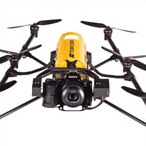
Using drones in business continuity planning and exercising | Continuity Central
The benefits of drone deployment during disaster recovery are well-known. They have supported emergency response teams around the world many times - providing critical, real-time insight for faster damage assessments and faster recovery decisions. But drones can also be deployed during business continuity planning and exercising to great effect, says Kate Treen.
For businesses with structural assets, such as buildings, powerlines, turbines and physical infrastructure, an incident is far more likely to impact badly when business continuity planning updates for these assets has not been effective or frequent enough. Collecting accurate data periodically (and aiming to reduce recovery times) can significantly improve the effectiveness of business continuity plans.


Organizational risks that you should definitely be acting on | Continuity Central
It is easy for organizations to feel overwhelmed by the number and scale of the risks that are faced; but often the perception of the potential harm engendered by various risks is exaggerated. In this article Chris Butler lists the real risks that every organization needs to consider.
Did you know the world’s most dangerous animal is not a shark, or a bear, but is in fact a mosquito? What’s certain is that human perception of risk is notoriously flawed; often, the events that concern and outrage us the most are the least likely to happen.
From political and economic tremors to cyber threats, 2017 represents another minefield of risks for businesses. For organizations, forging a deepened understanding of both threats and risk factors is crucial for remaining robust, resilient, and most of all, ahead of the competition. Part of this involves separating the myths from reality. So, what then are the real risks to business today?

2017 Cost of Data Breach Study | Ponemon Institute

Ponemon Institute has just released its 12th annual Cost of Data Breach Study. The report is sponsored by IBM and represents the industry’s gold-standard benchmark research.
Ponemon Institute researchers interviewed IT, compliance and information security practitioners representing 419 organizations across 12 countries: United States, United Kingdom, Germany, Australia, France, Brazil, Japan, Italy, India, the Middle East (including United Arab Emirates and Saudi Arabia), Canada and the ASEAN region (including Singapore, Indonesia, the Philippines and Malaysia).

The future of technology in business continuity - three things to think about
Continual rapid developments in technology and the subsequent impacts on society bring business continuity challenges and opportunities. In this article, Charlie Boffin, CEO of ClearView, explores the subject.

2017 FM Global Resilience Index | Continuity Central
The 2017 FM Global Resilience Index has been published. The annual index, which is online and interactive, ranks 130 countries and territories by their enterprise resilience to disruptive events. Now in its fourth year, the index provides a unique resource to help business executives site facilities, select suppliers, evaluate established supply chains and identify customers who may be vulnerable.
Users of the index can now investigate 12 quantified resilience drivers related to each country’s economic strength, risk quality and supply chain condition. The index also ranks countries for overall enterprise resilience.
Switzerland occupies the number-one ranking, reflecting high scores for its infrastructure, local supplier quality, political stability, control of corruption and economic productivity. Haiti ranks at the bottom of the index due in part to its high natural hazard exposure and poor economic conditions.

BCI - How to guides
Feel lost and/or confused about your business continuity planning? Want to maximize resilience in your organization, but not sure about what steps to take? The BCI How to Guides are here to help and give you the necessary guidance through the various phases of the Business Continuity Management (BCM) Lifecycle.
The following How to Guides are available from the BCI website.
- Policy & Programme Management
- Embedding Business Continuity
- Analysis of the BCM Life cycle
- Design of the BCM Life cycle
- Implementation of the BCM Life cycle

The Amazon Web Services outage: business continuity implications and actions | Continuity Central
On Feb 28th 2017 a four-hour outage impacted one of Amazon Web Services’ (AWS) largest cloud regions, US-EAST-1 in North America. Since many enterprises rely on AWS this outage, many times longer than the expected annual downtime for the S3 cloud storage system where the issue occurred, is highly concerning and requires a rapid review by business continuity managers.
The outage, caused by high error rates affecting the Amazon Simple Storage Service (Amazon S3), commenced at 12:35 pm ET and was fully restored by 4:49 pm ET, according to AWS. Amazon S3 is ‘object storage with a simple web service interface to store and retrieve any amount of data from anywhere on the web’ says AWS. It is marketed as being ‘designed to deliver 99.999999999% durability’; a claim which is now clearly questionable!
The lessons from this incident need to be learned; and Continuity Central would like to invite the views of business continuity professionals. To do this they have set up a quick Survey Monkey survey: please take part here, it will only take a few minutes.


How to Conduct a Business Impact Analysis for Disaster Recovery
SmartData Collective | June 10
Your disaster recovery strategy needs to be pretty comprehensive. It’s not just about making sure that your backup is viable. There’s an entire strategy that needs to be put in place and that means identifying the roles of your employees and establishing an action plan. But how do you know what to do unless you have some idea of how the business will be impacted?

AWS redundancy, DR set up no piece of cake
TechTarget | June 9
Before the cloud era, only a few organizations -- generally the biggest and best-funded -- could afford to have a second data center for business continuity or disaster recovery. The costs of hardware, space and personnel were too prohibitive for others.
With the cloud, however, adding capacity is relatively easy and dramatically less expensive. With multiple cloud locations and AWS availability zones, enterprises have the ability to build applications that can be more scalable and available than tradition on-premises apps. However, turning AWS redundancy into a fully functioning secondary off-site data center is not necessarily easy.

Business continuity training should happen first day on the job: World Conference on Disaster Management speaker
Everyone needs to be trained in business continuity management, and the importance of managing expectations is one lesson learned during the major floods in 2013 in southern Alberta, speakers suggested Tuesday at the World Conference on Disaster Management.

The major lesson IT can learn from Netflix's high availability testing methodology
High availability events are more likely to be triggered than disaster recovery events, but often aren't tested for as much. Here's what tech leaders can take away from Netflix's approach to the problem.